
Exterior Cleaning Treatments
To achieve the best possible results from our exterior cleaning services, I offer a range of professional treatments designed to restore, protect, and extend the life of your outdoor surfaces. These treatments are available alongside driveway cleaning, patio cleaning, and other exterior cleaning services to deliver a more complete, longer-lasting finish.
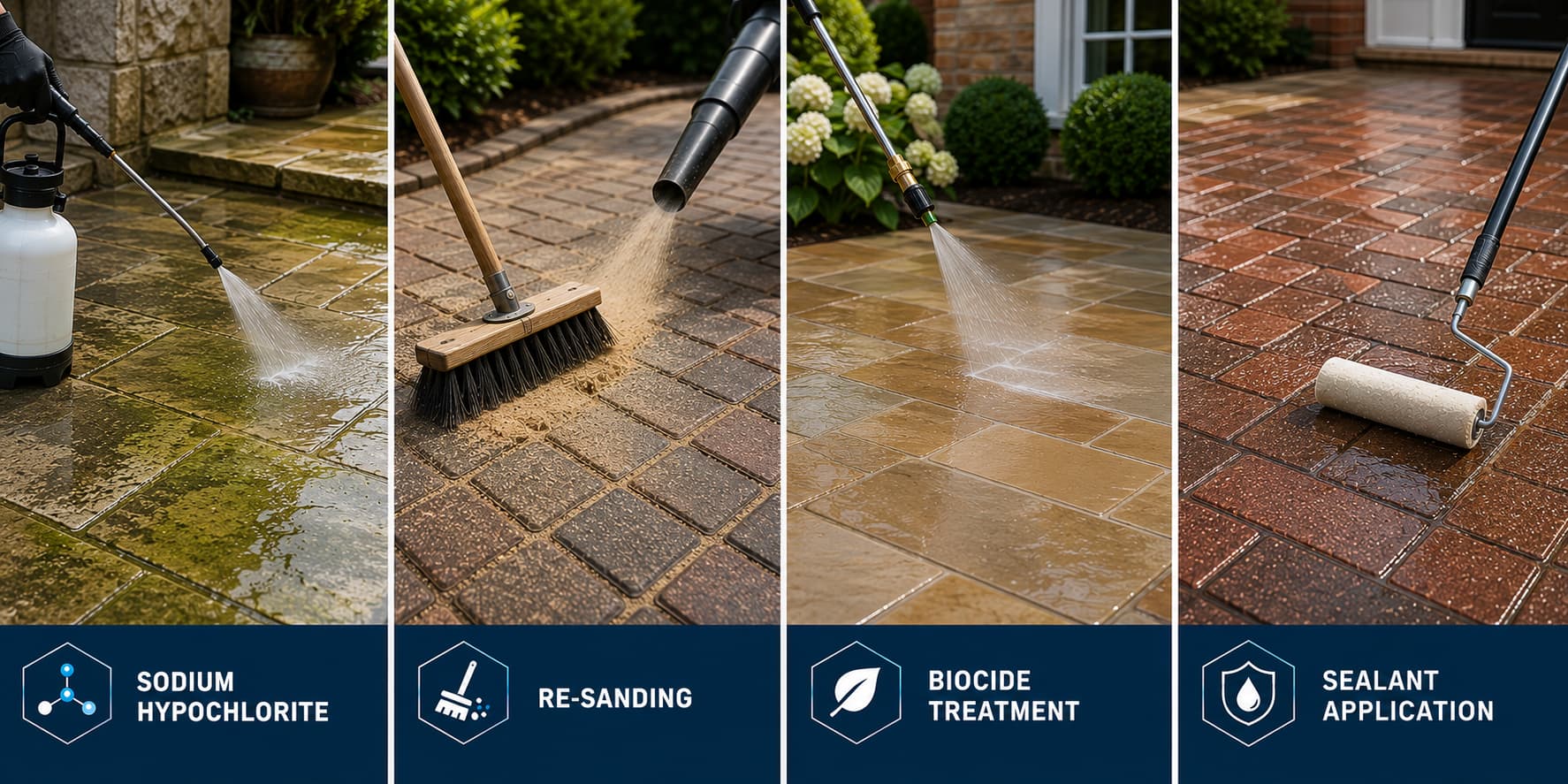
These services include sodium hypochlorite soft washing to effectively remove algae and organic growth, kiln-dried re-sanding for block paving, biocide applications to help prevent regrowth, and professional sealant treatments for added protection and durability. Each option is designed to improve both the appearance and longevity of your surfaces.
Below you’ll find a breakdown of each treatment in more detail, explaining how they work and when they are recommended. You can click through to learn more about any individual service and see how it can benefit your property.
Sodium Hypochlorite
Sodium hypochlorite is a widely used cleaning and sanitising solution that plays an important role in exterior cleaning and property maintenance. It is particularly effective at treating organic staining caused by algae, moss, mould, mildew and lichen on external surfaces. When used correctly, it helps restore the appearance of roofs, render, patios, driveways, cladding and other exterior building materials.
The product is a chlorine-based solution, commonly produced by combining sodium hydroxide and chlorine. Its cleaning action works by breaking down and oxidising organic growth, allowing contaminants to be removed more effectively than with water or pressure washing alone. This makes it especially useful for surfaces where biological growth has become deeply established and may quickly return if not properly treated.
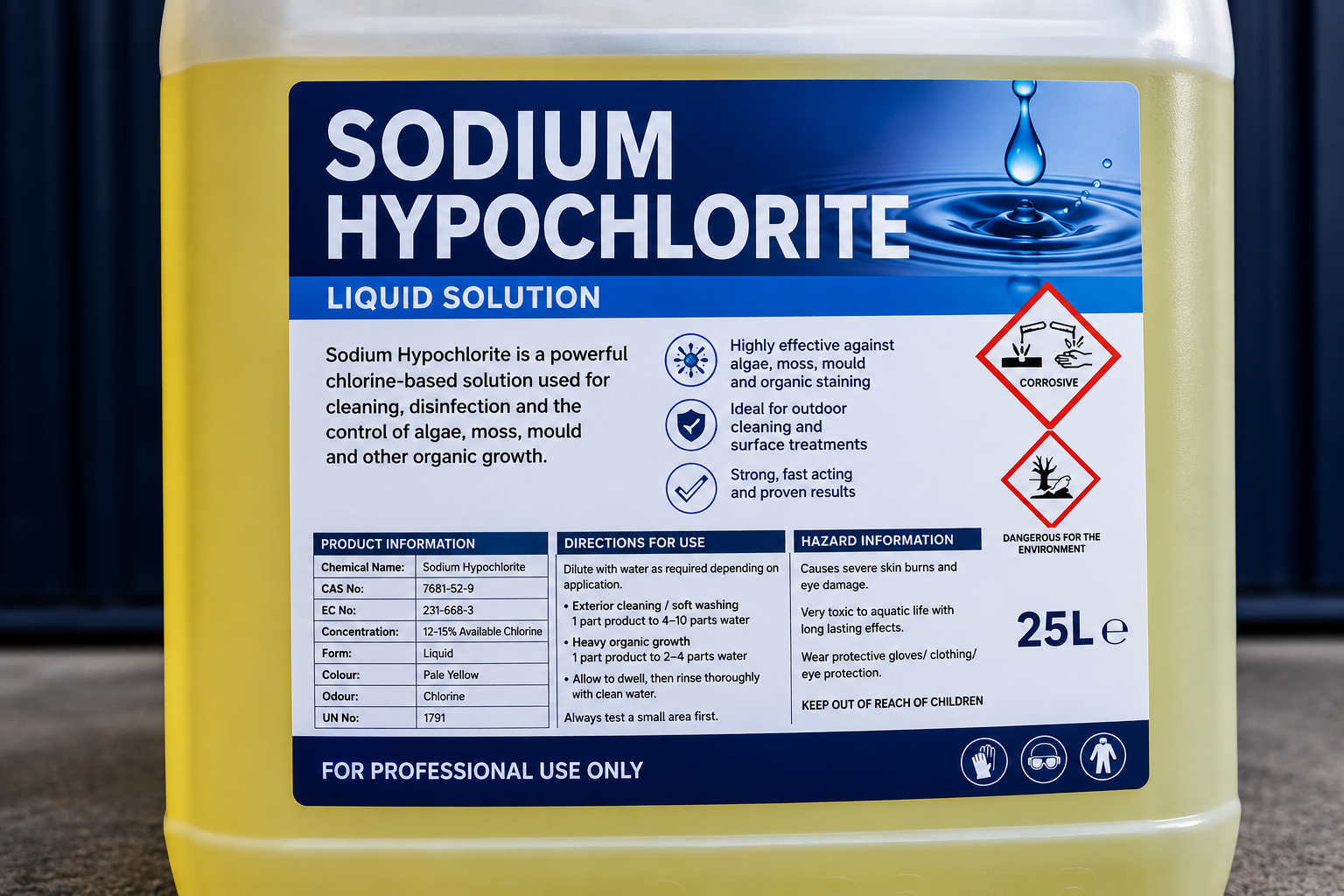
In exterior cleaning and restoration work, sodium hypochlorite is typically applied as part of a soft washing process. The solution is carefully diluted to suit the surface being treated and applied using specialist equipment. After an appropriate dwell time, the treated area may be rinsed or left to weather naturally, depending on the application and the cleaning method being used. Correct handling, dilution and environmental controls are important to ensure safe and effective results.
One of the main benefits of sodium hypochlorite is its ability to kill spores and remove the root cause of many organic stains, helping surfaces stay cleaner for longer. However, it is not suitable for every material and should always be used by trained professionals who understand the correct concentrations and application methods. The product is readily available throughout the UK from specialist chemical suppliers, with pricing typically varying according to concentration, quantity purchased and market demand.
Biocide Solution
A biocide treatment is a specialist solution used to control and prevent the growth of biological contaminants such as algae, moss, mould, mildew and lichen on exterior surfaces. It is commonly used as part of exterior cleaning, restoration and maintenance programmes to help keep buildings, roofs and hard surfaces cleaner for longer after initial cleaning has been completed.
Biocides contain active ingredients designed to target and disrupt the growth processes of microorganisms. Unlike cleaning products that simply remove visible dirt and staining, a biocide works at a microscopic level to treat spores and organic growth that may not be immediately visible. Different formulations are available depending on the intended use, surface type and environmental requirements, with many professional-grade products developed specifically for exterior applications.
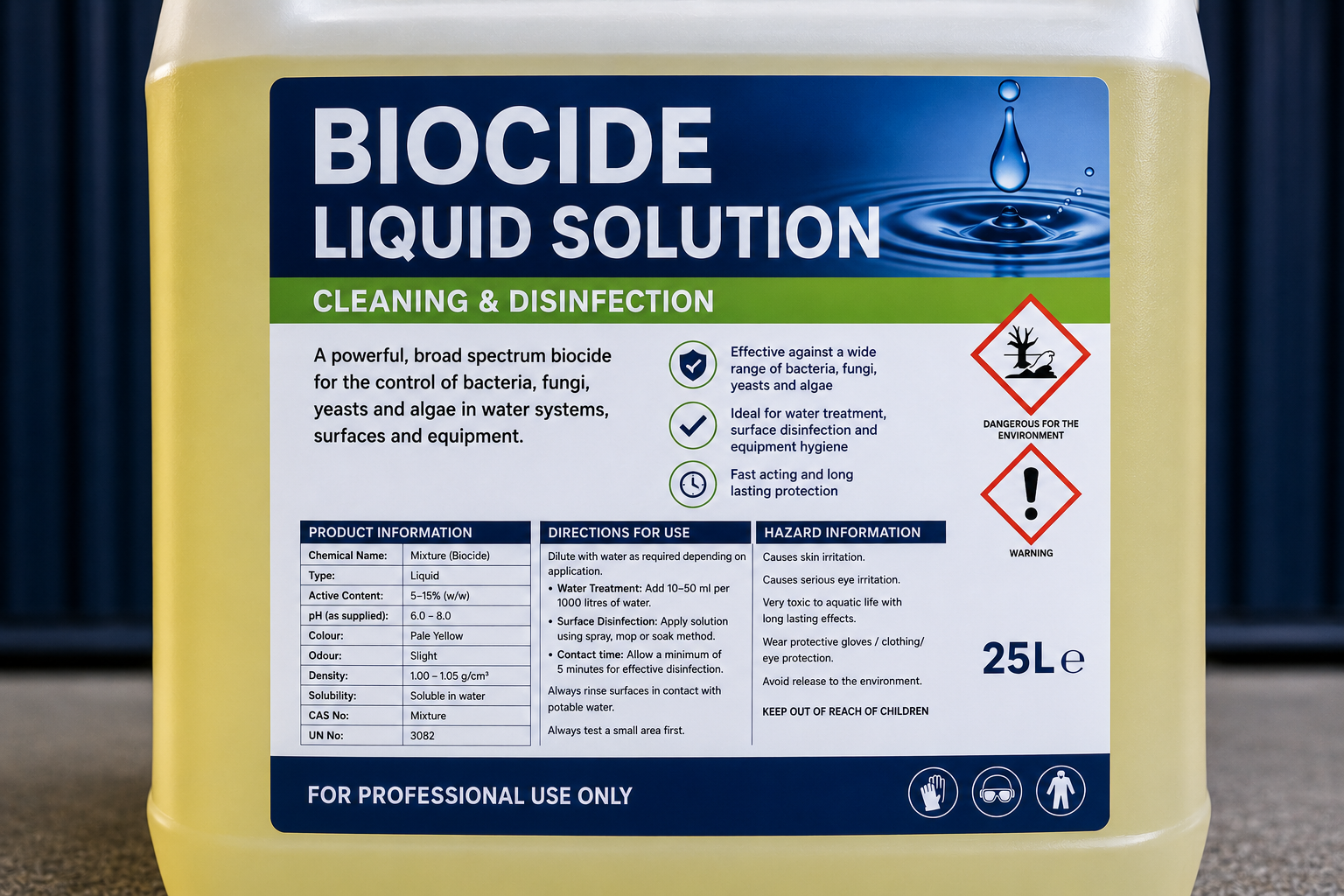
In practical terms, biocide treatments are frequently applied to roofs, render, patios, driveways, stonework, cladding and other external surfaces that are prone to recurring organic growth. Following cleaning, the treatment is usually applied at a controlled dilution rate using low-pressure spraying equipment. It is then left to work over time, helping to inhibit regrowth and supporting longer-lasting cleaning results. In some cases, weathering and rainfall continue the treatment process naturally after application.
The main benefit of a biocide treatment is its ability to reduce the return of biological growth, helping to maintain the appearance and condition of exterior surfaces between cleaning cycles. As with any professional treatment, correct product selection, application rates and environmental considerations are important to achieve the best results safely. Biocides are widely available through specialist cleaning and chemical suppliers across the UK, with costs varying according to formulation strength, coverage rates and project size.
Kiln Dried Paving Sand
Kiln dried paving sand is a specially processed jointing sand used to fill the gaps between block paving units. The sand is dried in a kiln to remove moisture, creating a fine, free-flowing material that can easily settle into narrow joints. It is an important component in the construction and maintenance of block paved driveways, paths, patios and commercial paved areas.
The material is typically made from carefully graded silica sand that has been heated to remove virtually all water content. Because the sand is completely dry, it can flow deeply into paving joints and compact effectively. Once brushed into place, it helps to lock individual paving blocks together, reducing movement and providing stability across the paved surface. This jointing action is essential for maintaining the structural integrity of block paving over time.
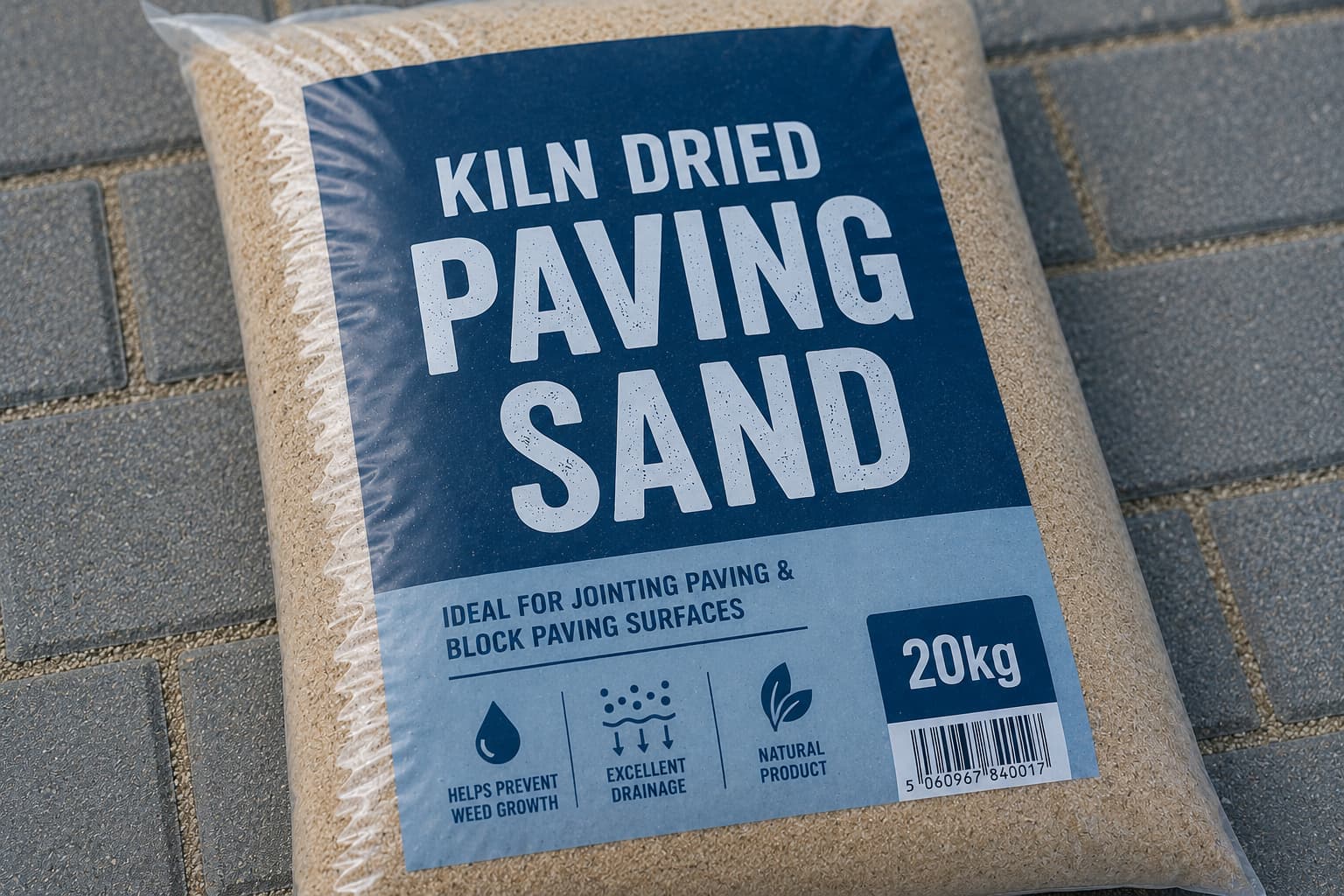
In exterior cleaning and restoration work, kiln dried sand is commonly applied after pressure washing or deep cleaning block paving. Cleaning often removes existing jointing material, leaving gaps that need to be replenished once the surface has dried thoroughly. The sand is brushed evenly across the paving and worked into the joints until they are fully filled. In some cases, this process may be followed by the application of a paving sealant to provide additional protection and durability.
One of the key benefits of kiln dried paving sand is its ability to improve the stability and appearance of block paving while helping to reduce block movement. However, it should only be applied when the paving is completely dry, as moisture can prevent the sand from flowing properly into the joints. The product is widely available throughout the UK from builders’ merchants, landscaping suppliers and paving specialists, with costs generally depending on bag size, sand grade and project requirements.
Paving Sealant
Paving sealant is a protective coating applied to paved surfaces to help preserve their appearance and condition over time. It is commonly used on block paving, concrete paving, natural stone and decorative hard landscaping to provide an additional layer of protection against weathering, staining and general wear. While not essential for every surface, sealing can form an important part of a long-term maintenance programme.
Most paving sealants are formulated using acrylic, polyurethane or resin-based compounds that penetrate the surface or form a protective film. Once cured, the sealant helps reduce the absorption of water, oils and other contaminants that can lead to staining or deterioration. Depending on the product selected, sealants can provide either a natural finish that maintains the original appearance of the paving or an enhanced finish that enriches colour and creates a subtle sheen.
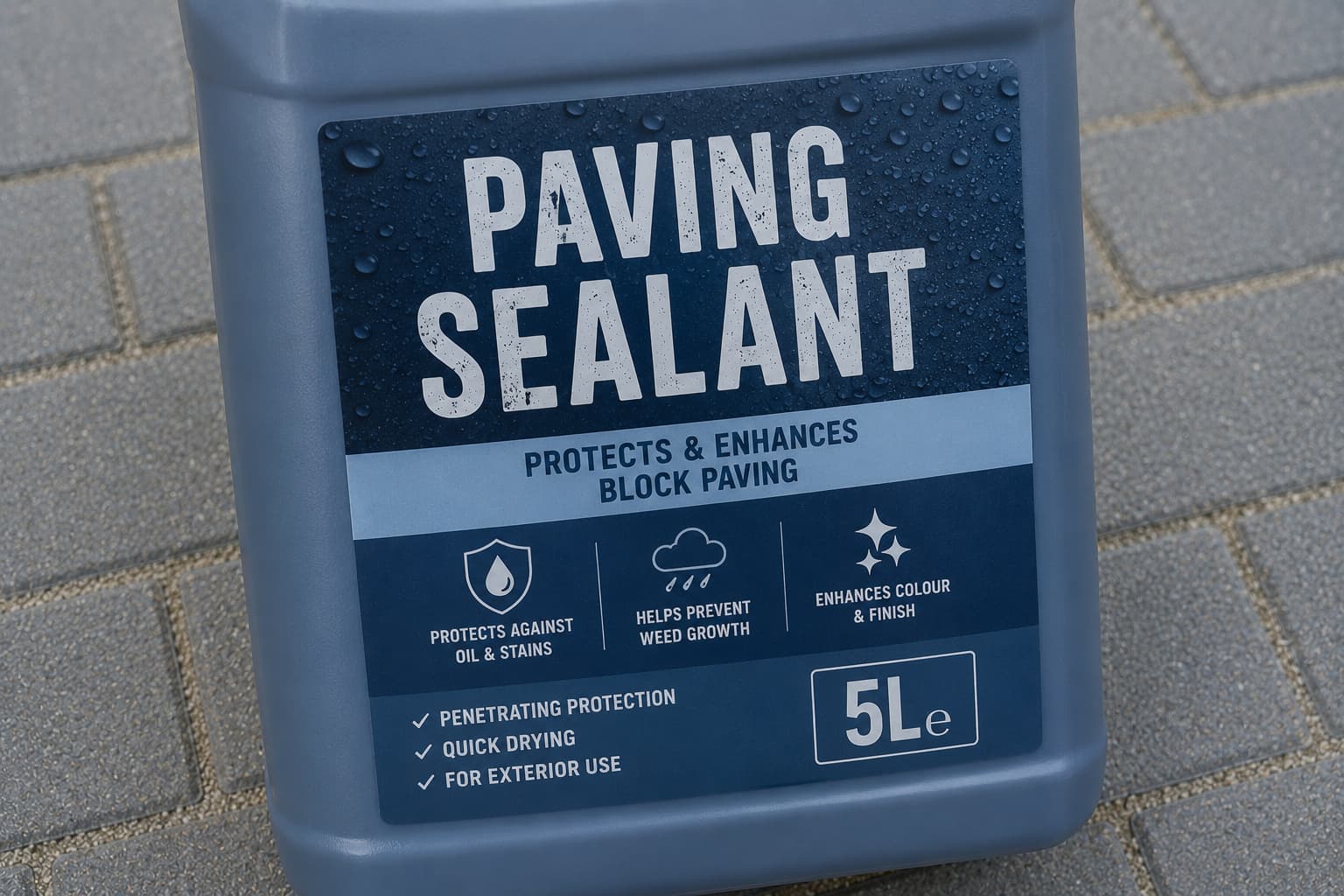
In exterior cleaning and restoration work, paving sealant is typically applied after the surface has been thoroughly cleaned and allowed to dry completely. For block paving, this often follows the replacement of jointing sand to ensure the paving is stable before sealing. The product is usually applied using rollers, brushes or specialist spray equipment, with coverage rates varying according to the type and porosity of the surface being treated. Proper preparation and suitable weather conditions are important to achieve an even, durable finish.
The main benefits of paving sealant include improved resistance to staining, reduced water penetration and easier ongoing maintenance. Some products may also help limit the establishment of moss, algae and weeds by reducing the amount of moisture retained on the surface. However, sealants require periodic reapplication as they naturally wear over time. Professional-grade products are widely available from paving, landscaping and construction suppliers across the UK, with pricing influenced by product type, coverage area and performance characteristics.